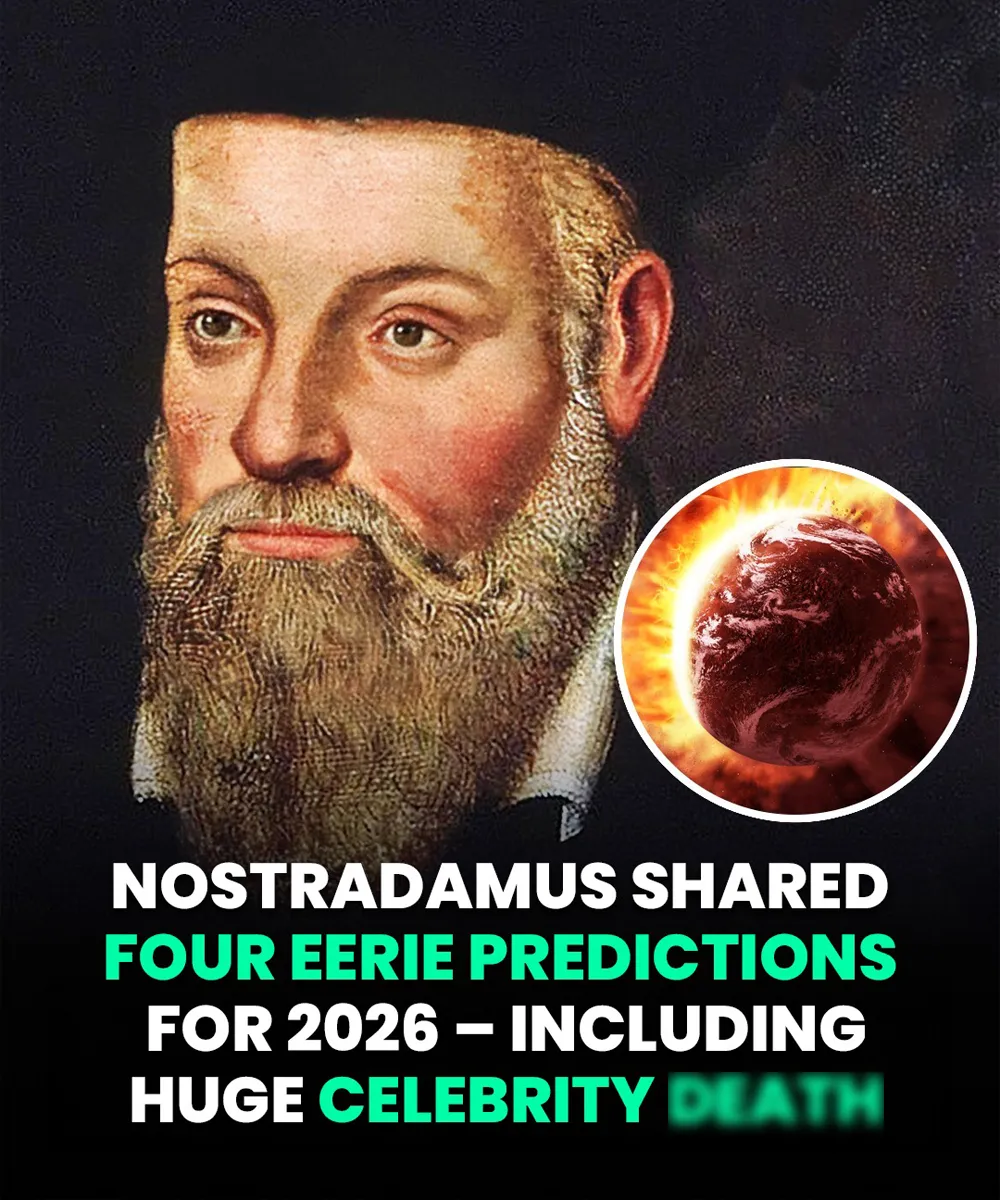
Michel de Nostredame, the 16th-century French physician and mystic, continues to haunt modern imagination with 942 quatrains that many believe forecast the world’s most catastrophic events. As 2026 approaches, interpreters of his 1555 work, Les Prophéties, have identified a series of unsettling visions characterized by global unrest and radical technological shifts. Followers point to his supposed accuracy in predicting the 9/11 attacks and the Covid-19 pandemic as reason for concern, while skeptics maintain that his archaic French and obscure Latin references are intentionally vague, allowing for selective hindsight that can fit almost any historical tragedy.
One of the most alarming visions for 2026 involves a “great swarm of bees” arising for a nighttime ambush, a metaphor many link to a sudden, coordinated strike by world leaders or invasive technological threats. This imagery is paired with a geographically specific and chilling prediction regarding the Swiss canton of Ticino, suggesting that even historically neutral territories may see “rivers overflow with blood.” These passages have fueled speculation about a renewed European conflict or a cross-border spillover of violence, challenging the long-held perception of Switzerland as a sanctuary untouched by the horrors of war.
The prophecies take a more apocalyptic turn with the invocation of Mars, the god of war, suggesting a period where “human blood will sprinkle the sanctuary” and “three fires rise from the eastern sides.” While some view this as a literal warning of a military clash between Eastern powers and the West, others interpret the West losing its “light in silence” as a metaphor for economic and digital displacement. In this reading, the conflict is one of artificial intelligence and algorithmic dominance, where Western nations struggle to maintain their status against the rapid technological advancements emerging from Asia.
Perhaps most sensational is the prediction of a “great man” being struck down in the daytime by a “thunderbolt,” leading many to fear the sudden death of a global celebrity, a prominent royal, or a high-ranking political leader. The visibility of such an event—occurring in broad daylight—implies a shock that would reverberate across the global stage. However, the seer’s dark outlook for 2026 ends with a glimmer of hope, suggesting that after the shadows fall, a “man of light” will rise to guide humanity toward a phase of renewal and deeper human connection, moving away from the cold dominance of technology.