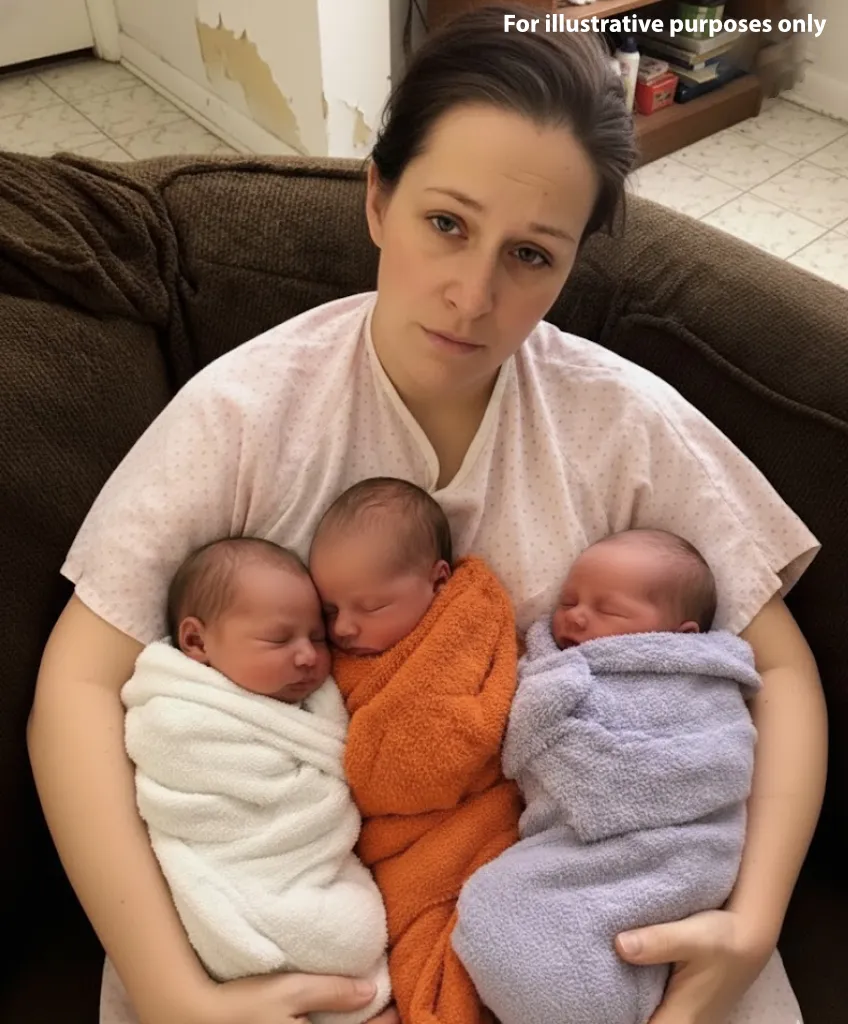
When the storm came, it tore through more than my roof—it ripped through the life I’d built out of scraps of courage and exhaustion. I was thirty-one, raising triplets alone after their father vanished the day I told him I was pregnant. The house my parents had left me was small but ours, until that night when the wind screamed like a thing alive and rain poured through a hole where my bedroom once was. By morning, we had nothing. The government check couldn’t buy even a patch of shingles. I laughed holding it, not because anything was funny, but because crying would have drowned me faster. For weeks, the boys and I slept in a shelter that smelled of bleach and heartbreak. My best friend Trinity watched them when I cleaned offices for pocket pay. Every night, I whispered to my sons that we’d make it—that somehow, the world would give us one more chance.
That chance came dressed in an envelope of heavy cream paper. Trinity found it, bursting into the shelter with a look I hadn’t seen since before the storm—hope. Inside was an invitation to a charity event hosted by a wealthy local businessman, Mr. Skoll. “Every guest receives a special gift,” the card said. I didn’t believe it was real, but Trinity wouldn’t let me refuse. The night of the event, I stood trembling in a borrowed blue dress under chandeliers that sparkled like stars too rich to touch. When the host began to speak, I hardly listened—until he said my name. He told the crowd about a young mother of triplets who had lost everything, who had fought to stay afloat after her roof had caved in. “She deserves steady ground,” he said. “She deserves hope.” Then he handed me a set of keys. My knees nearly gave way as applause broke over me like a wave.
The house was real—yellow paint, white trim, sunlight pouring through spotless windows. In the nursery, three cribs stood in a perfect row, as if waiting just for us. I cried until I couldn’t breathe. But on the kitchen counter sat another envelope, my name written in that same graceful hand. Inside was a letter that made my stomach drop. The house wasn’t a gift—it was part of a campaign. Mr. Skoll’s company wanted to use our story to promote a “community renewal” project. I could live there for twenty years, maybe buy it later, but in return I’d have to share my story in speeches and photos. It felt like my pain was being bought, dressed up as inspiration. Trinity read the letter and said gently, “Maybe this isn’t selling out, Dede. Maybe it’s showing that kindness can still matter.” That night, after my sons fell asleep in their new cribs, I stared at the phone for an hour before calling the number. “Yes,” I whispered. “I’ll do it.”
That was a year ago. I stood in front of cameras, told our story, smiled even when my throat ached from holding back the truth—that hope sometimes comes wrapped in fine print. But through those talks, I met people who saw more than a headline. One of them, Elias, owned a construction company. He gave me a job in his office, steady hours, health insurance, and dignity I hadn’t felt in years. I’m writing this now from that same yellow porch, watching my boys sleep under a roof that doesn’t leak. I’ve learned that help doesn’t always come the way you expect it to. Sometimes it’s conditional, sometimes it stings—but it’s still help. I once thought the letter on that kitchen table was a price I couldn’t pay, but it became a door I didn’t know I needed. Because when someone hands you a second chance, the real gift isn’t the house—it’s the courage to walk inside and start again.