The moment that sparked one of country music’s most enduring classics did not happen in a recording studio or a songwriter’s notebook. It happened quietly, almost invisibly, in a dim, smoky bar where the noise of clinking glasses mixed with hushed conversations. Joe Allison was there when he overheard a man using a public phone, speaking softly into the receiver with a tenderness that felt too personal to be shared. The man’s voice was low and fragile, shaped by longing and restraint, as he tried to reach someone who clearly meant everything to him. One sentence drifted through the haze and lodged itself in Allison’s mind, heavy with emotion and unresolved love. It was the kind of moment most people forget within minutes, but for Allison, it carried the unmistakable weight of a story that needed to be told.
Together with his wife Audrey, Allison began shaping that overheard vulnerability into lyrics that felt almost intrusive in their honesty. They didn’t try to dramatize the moment or embellish it with clever turns of phrase. Instead, they leaned into simplicity, letting the song feel like a private confession accidentally left open for the world to hear. The words unfolded like a quiet plea rather than a declaration, grounded in the aching pause between what was said and what was left unsaid. When producer Chet Atkins became involved, he understood immediately that this song did not need spectacle. He wrapped the lyrics in gentle guitar lines and restrained orchestration, allowing space for the emotion to breathe instead of overwhelming it with excess.
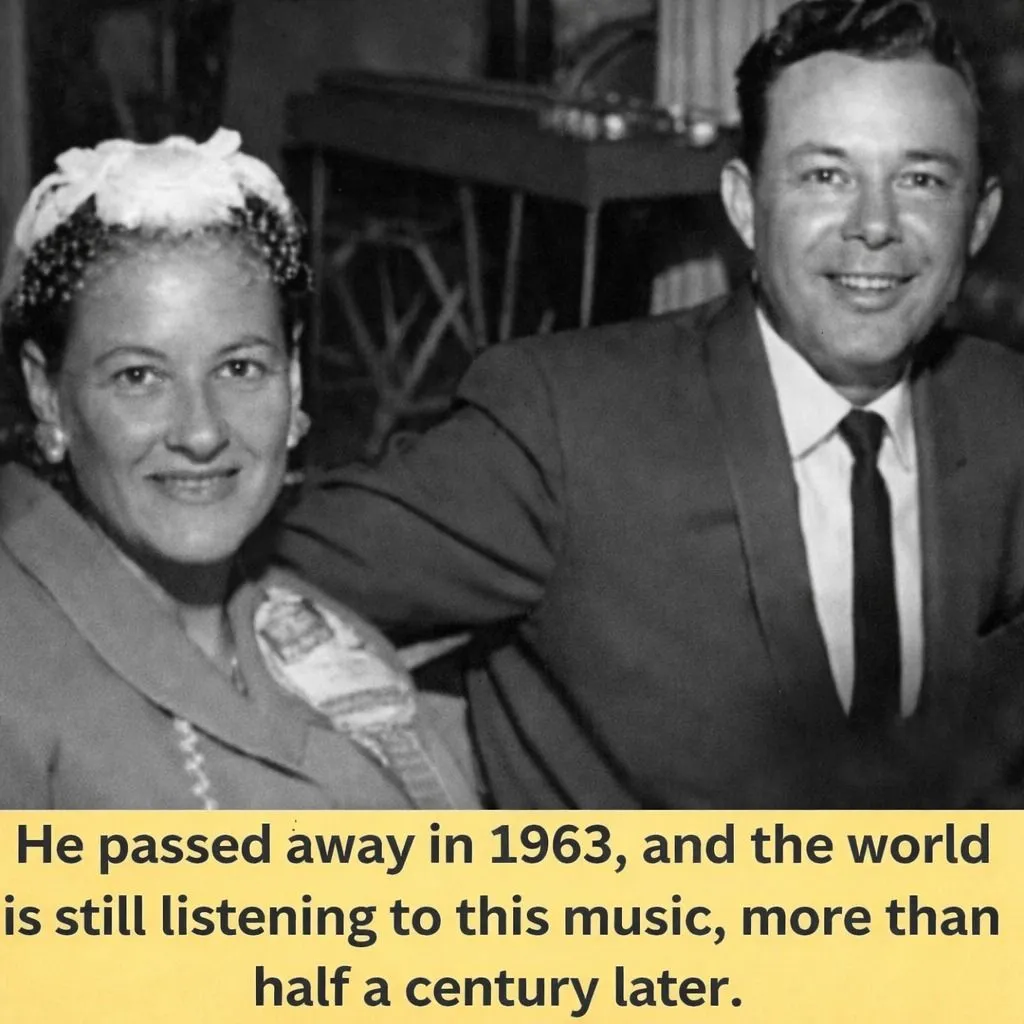
Then Jim Reeves stepped up to the microphone, and the song found its true voice. His smooth baritone didn’t perform the lyrics so much as surrender to them. Reeves sang with a calm intimacy that made the listener feel as if they were standing in that same bar, overhearing something they weren’t meant to hear. There was no force in his delivery, no attempt to impress. The power came from restraint, from the way longing settled into every syllable. When “He’ll Have to Go” was released in 1960, it didn’t rush its way into popularity. It moved quietly at first, climbing the country charts before crossing into the pop world, subtly dissolving the boundaries between genres without ever announcing itself as a breakthrough.
Even after Jim Reeves’s life was cut tragically short, the song refused to fade. It continued to play on radios, appear in films, and surface in late-night memories where heartbreak feels closest to the surface. What began as one overheard phone call became something timeless, proving that the most powerful music often grows from moments too intimate to be staged. “He’ll Have to Go” did more than rewrite country music history; it reminded listeners that vulnerability, when handled with care, can echo far beyond its origin. Long after the bar fell silent and the phone line went dead, that fragile voice kept speaking, carrying its quiet truth into eternity.