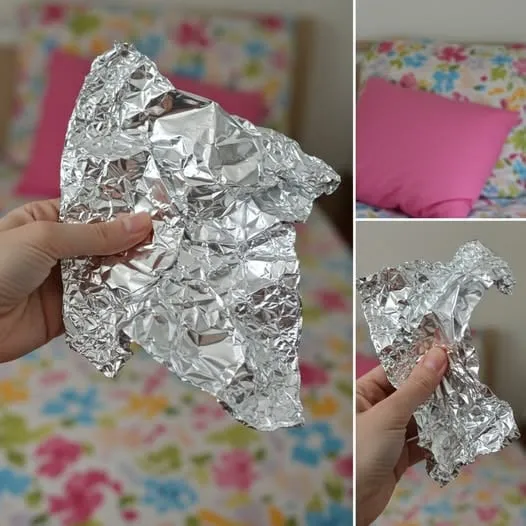
At first glance, the act of sliding a crinkling sheet of aluminum foil beneath a pillowcase seems less like a sleep aid and more like a confused kitchen mishap. Yet, this metallic ritual has recently surfaced in the hushed corners of online communities as a modern-day talisman for the sleep-deprived, representing a quiet, almost desperate attempt to find peace in a world that never truly goes dark. It turns an ordinary household staple into a symbolic barrier against the invisible chaos of the day, acting as a physical anchor for the mind to begin its slow descent into rest. For many, the simple, eccentric act of preparing this “shield” serves as the primary signal that the day’s labor is finished and the sanctuary of the night has begun.
Supporters of this habit often lean into the theory that the foil acts as a rudimentary shield, supposedly blocking subtle environmental interferences and electromagnetic signals from the digital devices we can’t seem to leave in the hallway. Whether there is a belief in the physical properties of the metal or it is simply used as a psychological boundary to help the mind “unplug,” those who swear by it describe a newfound sense of control over their sleep environment. The visceral crinkle of the foil becomes a reminder to leave the digital world behind, creating a mental fence between the relentless ping of notifications and the quietude required for recovery. In this context, the foil isn’t just a material; it’s a commitment to a ritual that prioritizes comfort over the constant connectivity of modern life.
While the idea of a DIY signal-blocker is intriguing, the cold, clinical truth is that there is no scientific evidence to suggest that a strip of foil can actually improve the quality of a REM cycle or protect the brain from ambient electronics. Sleep specialists generally agree that while aluminum is excellent for a baked potato, it does very little for human biology, which consistently prefers a steady schedule, a cool room, and reduced screen time over kitchen-drawer superstitions. However, we cannot underestimate the profound power of the placebo effect; if the mind convinces itself that a silver shield is the only thing standing between it and a restless night, the body often responds with a self-fulfilling wave of relaxation. The benefit, it seems, is less about the conductivity of the metal and more about the power of belief in a world of persistent stress.
Ultimately, the trend of placing foil under the pillow highlights a creative, if slightly quirky, human drive to reclaim rest through personal ceremony and intention. It proves that improving our well-being doesn’t always require expensive gadgets or clinical interventions, but can sometimes be found in the small, stubborn rituals that make us feel safe. Whether one chooses the metallic route or sticks to the traditional path of dim lights and deep breaths, the goal remains the same: to find a personal ritual that makes the transition into sleep feel intentional and protected. Sometimes, the most effective tool in our arsenal for a better night isn’t a high-tech device, but the simple, grounding belief that tonight, finally, we are allowed to be still.