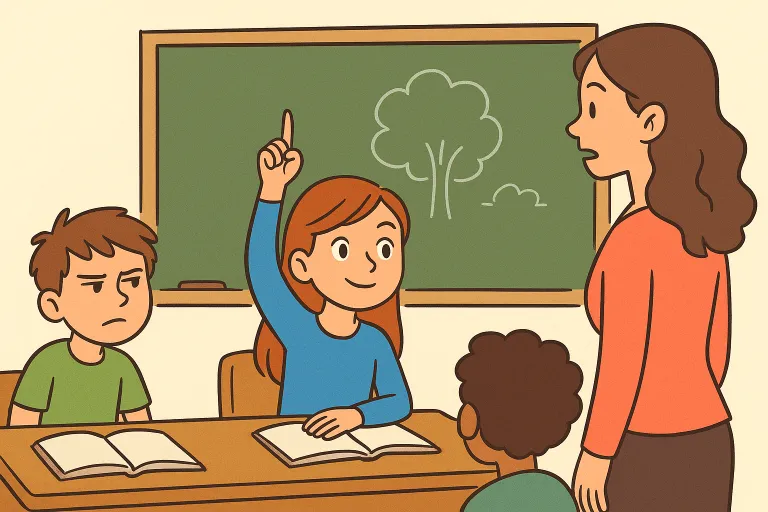
The morning began like any other in Ms. Parker’s first-grade classroom — the quiet buzz of crayons, the shuffle of worksheets, the laughter of children just beginning to understand the world. That day’s lesson was about nature and evolution, meant to inspire curiosity. But somewhere between the trees and the sky, the topic turned unexpectedly toward belief. When Ms. Parker asked her students what they could see — the grass, the clouds, the sunlight — she led them neatly to one question that changed the tone of the room. “Can you see God?” she asked. When little Tommy said no, she smiled and declared that meant God must not exist.
The classroom fell into silence until a small hand rose. It belonged to Emily, a bright-eyed girl with pigtails and quiet confidence. “May I ask Tommy something?” she said. Ms. Parker nodded, unaware that the next few moments would be retold by parents for weeks. Emily repeated the questions — about the tree, the grass, the sky — until the class grew restless. Then she paused and asked the one question no one expected: “Tommy, do you see Ms. Parker’s brain?” The class erupted into laughter as Tommy shook his head. “Then maybe she doesn’t have one,” Emily said, her smile innocent but her logic sharp. Even Ms. Parker, flushed and speechless, couldn’t help but recognize the wit behind the jab.
That evening, Emily told her parents what had happened, her words tumbling out with pride. Her mother gasped; her father nearly choked on his drink from laughing. They told her she’d been brave, but more importantly, kind — that defending her faith didn’t require anger, only truth spoken with love. News of the exchange spread through the school, whispered by teachers and parents alike. Some chuckled, others reflected. Ms. Parker herself later admitted that the little girl’s words had made her think about how easily adults dismiss what they can’t see.
When show-and-tell came later that week, Emily brought a simple drawing: a blue sky, green grass, and a small girl holding hands with an invisible figure outlined in light. “That’s God,” she said when asked. The class grew still again, not in mockery this time, but in wonder. What she had taught them, without even realizing it, was something that theology and science have wrestled with for centuries — that not everything real can be measured, and not every truth can be seen. Sometimes, faith shines brightest through the smallest voices.