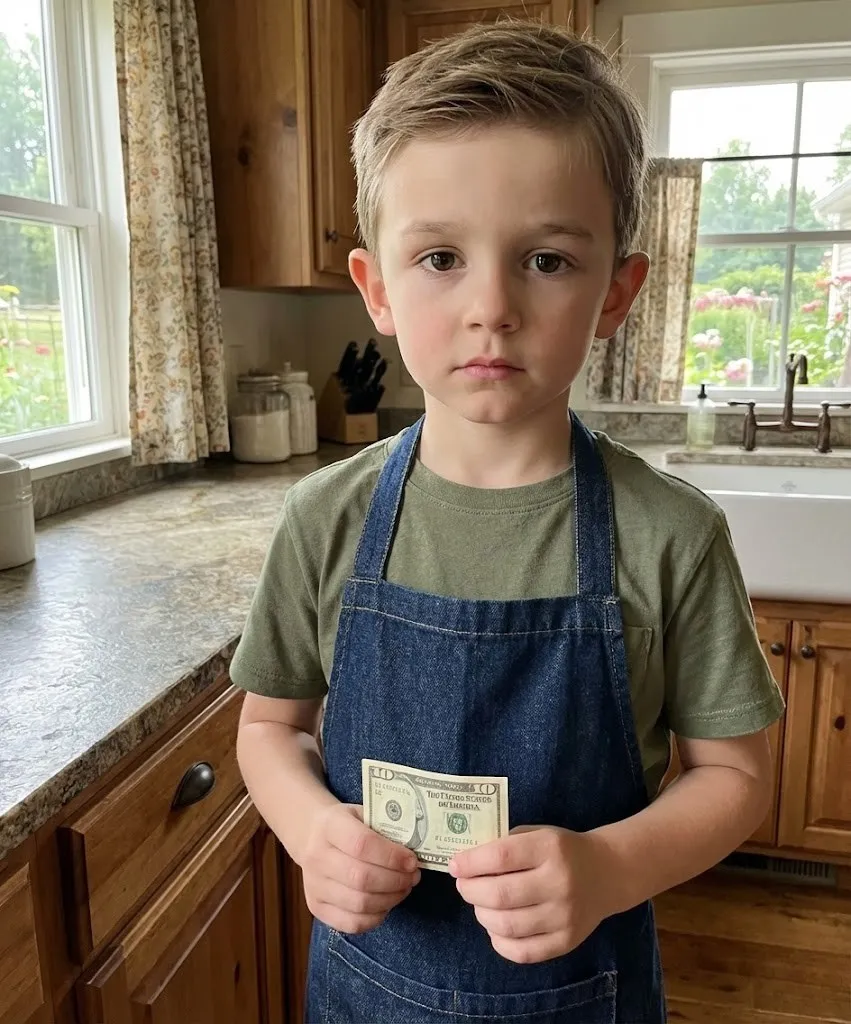
We lived on a quiet cul-de-sac where everyone knew everyone — except for Ms. Abby, the elderly woman in the ivy-covered house at the end of the street. Her curtains were always drawn, her hedges overgrown, and kids whispered spooky stories about her every Halloween. I never paid much attention to the gossip, but I also never had a reason to approach her. That changed when my son Gerry burst through the door one afternoon announcing that she had invited him over to bake cookies. It seemed strange coming from someone so private, but Gerry was excited, so I agreed. Each day afterward he returned from her house happier than ever, talking about old recipes and vintage kitchen gadgets. I told myself he was simply being kind to a lonely neighbor — until he came home holding an envelope of cash.
At first it was just $10, which I tried to brush off as a small thank-you for helping her with dishes or chores. But the next week, it became $20, and when I pressed Gerry about it, he grew nervous and confessed there was a “surprise” he couldn’t tell me about. That was the moment my gut tightened. Why would a reclusive elderly woman give a child money and keep secrets from his mother? The next day, I walked Gerry to her house myself, but he slipped inside quickly and shut the door before I could speak to Ms. Abby. Anxiety pushed me around the back of the house, where I found a small gap in the curtains. One glance inside froze me in place: photos of me and Gerry were spread across the table — some from my social media, others candid from around the neighborhood. Heart pounding, I rushed through the unlocked back door, grabbed my son, and called the police immediately.
Two officers arrived and spoke to Ms. Abby while I waited outside with Gerry, still shaking with fear and anger. When an officer finally asked me to come back in, her tone was calm — almost gentle. Inside, Ms. Abby tearfully explained that she had lost her daughter and grandson a few years earlier. Gerry reminded her of the boy she’d lost. When he mentioned my upcoming birthday, she suggested making a scrapbook like the ones her grandson used to make her. The photos were gathered with Gerry’s help, and the money she’d given him was to print them at school. She admitted she should have involved me sooner but said she hadn’t realized how to explain without breaking down. My anger melted into embarrassment as the truth sank in: I had let fear paint the worst picture of someone who was simply grieving and trying to connect.
Everything softened after that. The police left, I apologized, and Gerry proudly showed me the scrapbook they’d been working on. In the weeks that followed, Ms. Abby slowly stepped back into the world — gardening, chatting with neighbors, even sharing cookies with other kids. She wasn’t suddenly outgoing, but she wasn’t hidden anymore. And as I watched my son help her rediscover a little joy, I realized something important: sometimes children see the good in people long before adults allow themselves to.