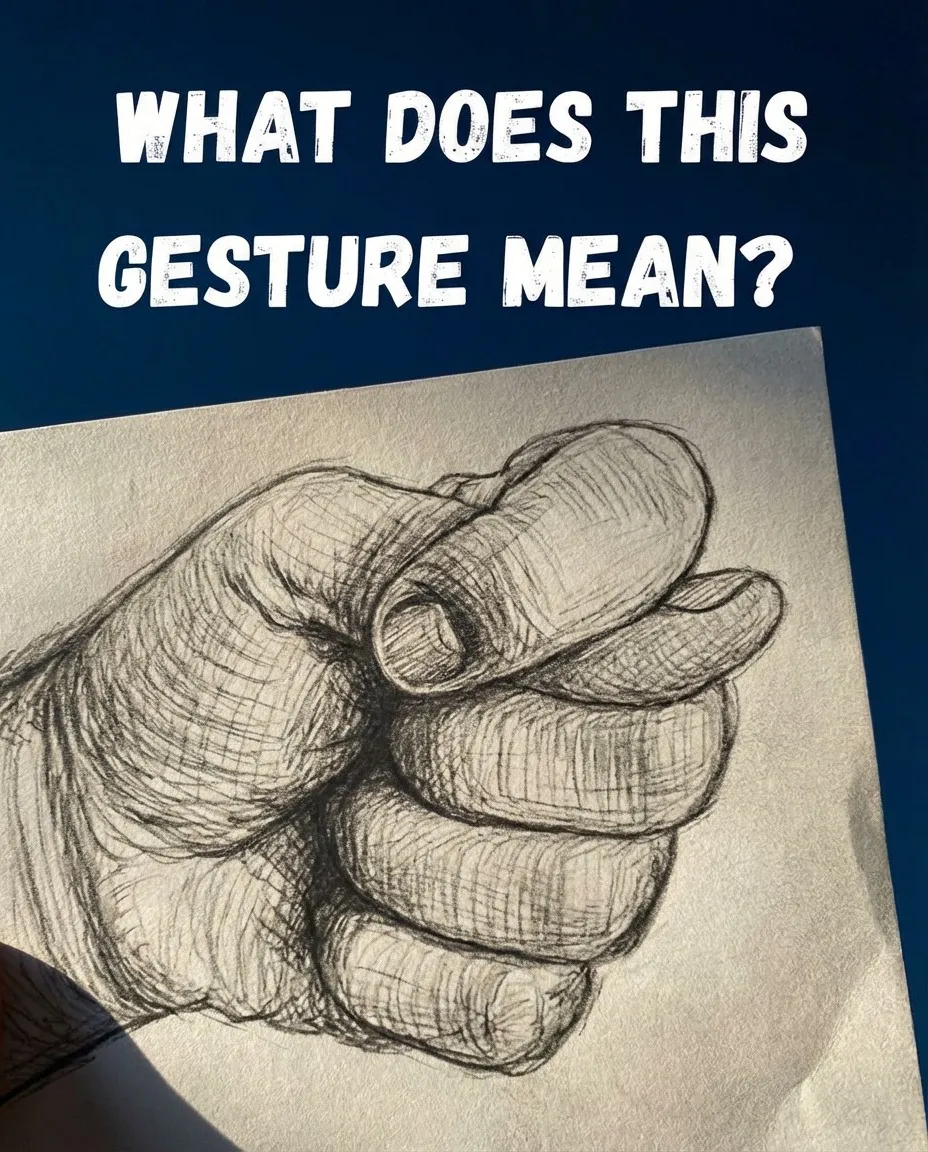
Many people look at a clenched fist and see only a simple hand movement, but there is a specific version that carries a deep history. When the thumb is tucked tightly between the first two fingers, it creates a sign known in many different cultures as making a fig. Long before we had the convenience of instant messages or colorful emojis, this quiet signal allowed people to communicate very clear meanings without saying a word. With a single motion of the hand, an individual could refuse a demand or signal their defiance to those around them. It was a very effective way to say that something was not going to happen without having to engage in a verbal argument or lengthy explanation.
During the nineteenth century in European villages, this small gesture offered a unique way for common people to express resistance. It was often used in situations where open conflict might be dangerous or inappropriate for the setting. By using the fig gesture, villagers could push back against unfair requests or local authority figures while keeping a sense of humor and subtlety intact. This allowed them to maintain their personal dignity even when they faced challenging social pressures. It became a silent language of the working class and a tool for those who wanted to stand their ground in a quiet but firm manner.
Beyond its use as a sign of defiance, the fig gesture also held significant symbolic value in various folk traditions and family circles. Many believed that the closed fist represented a form of hidden strength that resided within a person regardless of their outward circumstances. The tucked thumb was often viewed as a protective charm that people used to ward off bad luck or the legendary evil eye. Grandparents and elders frequently passed this habit down to younger generations as a playful way to respond to teasing or lighthearted banter. It offered a sense of quiet resolve during times of uncertainty and provided comfort to those facing difficult separations or personal challenges.
In our modern world, this traditional gesture is rarely seen because digital communication has replaced much of our unspoken physical language. Most people today prefer to use text messages and digital symbols on their phone screens rather than physical signs to express their feelings or reactions. However, the true meaning of the fig gesture has not entirely disappeared from our collective memory. It serves as a powerful reminder that we do not always need loud words or grand displays to get a message across to others. Subtlety and wit can still speak just as loudly as any spoken sentence when we choose to use them with intention and care.