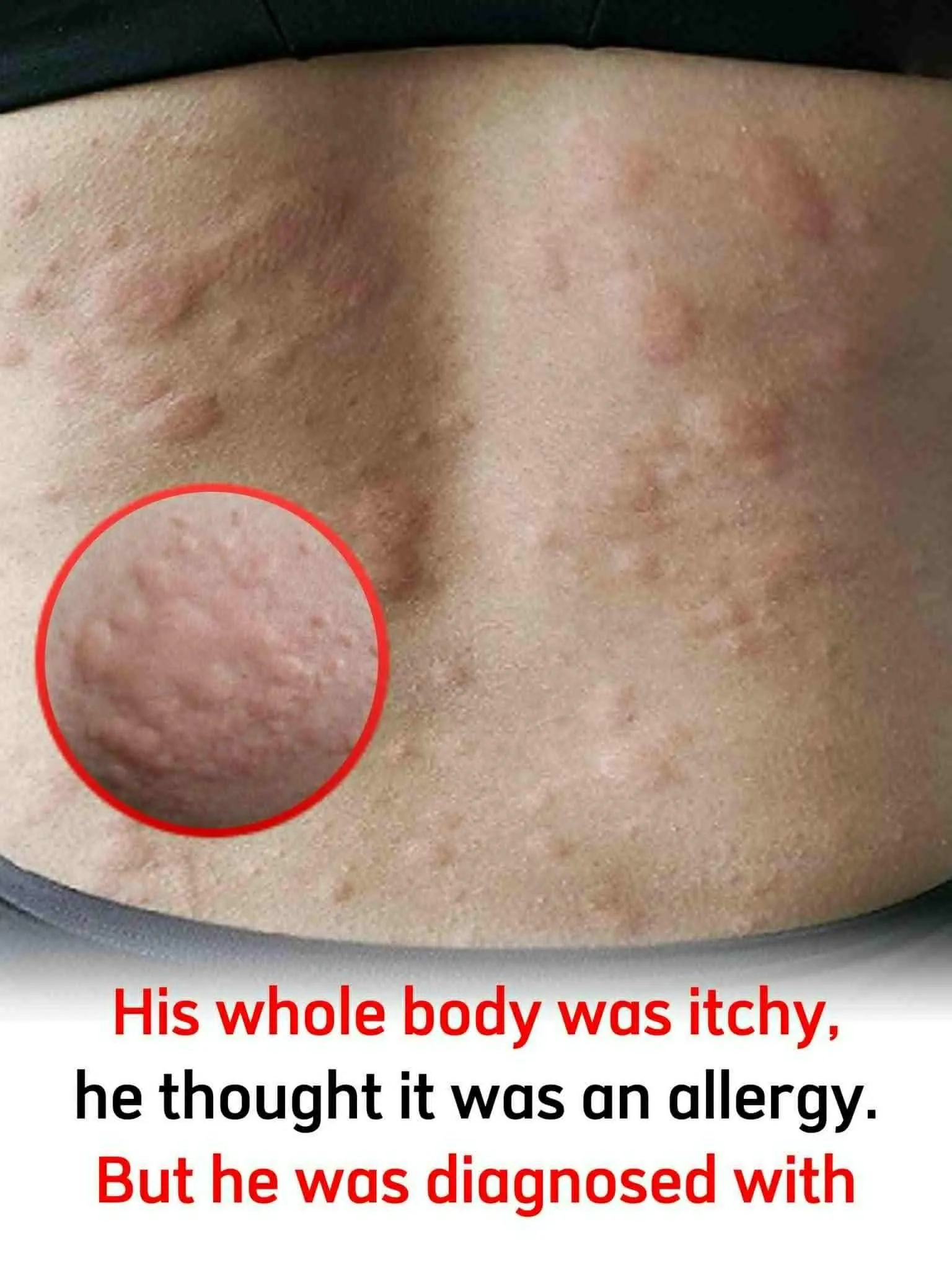
For weeks, he brushed off the strange, relentless itching crawling across his skin, convincing himself it was nothing more than a seasonal allergy or a detergent gone wrong. The red welts appeared without warning—angry, raised patches that burned and tingled until he could hardly sleep. At first, he hid it, embarrassed by how quickly the hives spread, how unpredictable they were, how no lotion or home remedy seemed to ease the torment. But when the itching grew so intense that it woke him in the night, leaving him trembling and exhausted, he finally admitted something was deeply wrong. What he thought was a simple reaction was the beginning of a diagnosis he never expected.
The moment the doctor examined him, everything shifted. Those welts weren’t random; they were urticaria—hives triggered when the body’s own immune system releases histamine in waves of confusion. What shocked him most was learning how easily this condition could disguise itself as stress, food sensitivity, or a passing infection. The doctor explained how hives could appear anywhere on the body, swelling in clusters, sometimes fading within hours, sometimes returning with a vengeance. And when deeper swelling struck—his lips, his eyelids, even the tight pressure in his throat—he realized he wasn’t just uncomfortable anymore. He was in danger. What he’d brushed off as irritation was actually his body sounding an alarm.
Tests revealed that his case wasn’t the short-lived kind he’d hoped for. Instead, his symptoms lingered, stretching beyond six weeks and crossing the threshold into chronic urticaria—the kind with no clear cause, no single allergen to avoid, and no easy cure. He had to confront triggers he never considered: stress that tightened his chest, sudden temperature changes, even pressure on his skin from leaning against a chair too long. He learned that infections could set it off, that his own immune system might be involved, and that managing it meant more than creams and cold packs. It meant a lifestyle shift, patience, and accepting that some days would be harder than others.
Yet with the right treatment plan—daily antihistamines, avoiding known triggers, and learning to recognize the earliest warnings—his life slowly returned to something steady again. The itch didn’t rule his days the way it once had, and the fear that gripped him during the swelling episodes began to loosen its hold. He kept a journal, tracked his flare-ups, and discovered patterns he never would have noticed alone. And although urticaria remained a part of his story, it no longer overshadowed every moment. Instead, it became a reminder that listening to his body wasn’t a weakness but a necessity. And in finally seeking help, he reclaimed comfort, confidence, and control—one day at a time.