When I first found those curious little wooden objects at my grandma’s house, I wasn’t sure what they were — smooth, sturdy, and shaped with an old-fashioned simplicity that felt out of time. It turned out they were wooden clothespins — relics of a bygone era when laundry was hung in the sun and the rhythm of daily life moved slower, steadier. These small, unassuming tools have a surprisingly rich history dating back to the early 19th century. Originally crafted from bone, horn, or metal, they eventually evolved into wooden versions that became household staples, carved by hand with care and precision by local craftsmen.
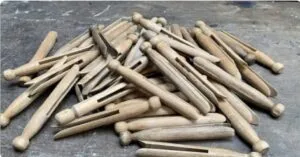
Before electricity and dryers, laundry was a communal ritual. Families gathered outdoors, clotheslines stretched between trees or posts, and every breeze carried the scent of soap and sunlight. Wooden clothespins were more than just tools — they were part of the rhythm of domestic life, symbols of patience, hard work, and resourcefulness. Over time, their design — simple yet efficient — became iconic, surviving generations of change and technology.
Even today, wooden clothespins remain wonderfully versatile. They hold more than laundry; they seal chip bags, organize papers, display family photos, and feature in countless crafts and DIY projects. Their strength and eco-friendliness stand in quiet defiance of the throwaway culture that came later. To hold one in your hand is to feel a connection to generations past — a tangible reminder of sustainability before it became a buzzword.
Finding those clothespins at Grandma’s wasn’t just a glimpse into her housekeeping habits — it was like opening a small window into history. In their simplicity lies something deeply human: resilience, creativity, and the beauty of making do with what you have. They remind us that even the smallest, humblest things can hold the weight of memory — and that sometimes, what looks ordinary is anything but.